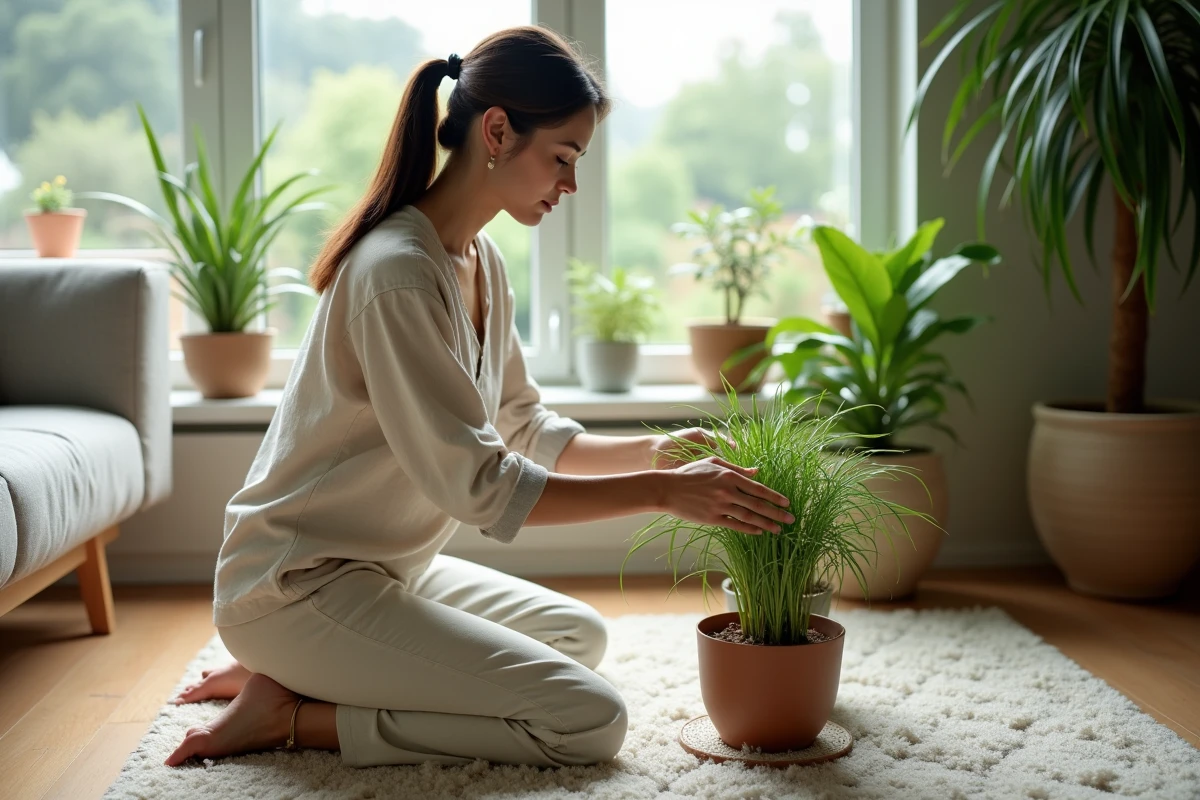
Indoor air pollutant concentrations can be up to five times higher than those of outdoor air, according to the Agency for the Environment and Energy Management. Yet, the majority of homes do not take this factor into account in their design or renovation.
Traditional materials still dominate construction, even though some release undesirable compounds year after year. When it comes to insulation, the reflex is often to prioritize low prices, without considering the consequences on indoor air quality or thermal balance. However, ecological alternatives, whose effectiveness is no longer in question, are far from having the place they deserve in our homes.
Why have health and ecology in the home become essential today?
Sustainable housing is not an abstract concept: it is a tangible response to the rise of allergies and the increase in greenhouse gas emissions. Everything indicates that it is time to rethink your home to aim for a more responsible framework. Nowadays, a house is no longer just a roof: it reflects a quest for quality of life, where health interacts with ecology.
The housing sector concentrates the challenges related to indoor air, energy savings, and material choices. Recent studies show that the air in our homes can be more polluted than that of a large metropolis. In light of this observation, integrating solutions for sustainable housing is not a detail. Controlled ventilation, optimized insulation, healthy materials: every adjustment impacts the environmental footprint and everyday comfort.
This shift towards a healthier, more sustainable habitat reflects a collective mobilization. Residents are informing themselves, seeking suitable solutions for themselves and their environment. Whether it involves renovating, optimizing energy consumption, or limiting pollutants, the approach is no longer a choice but a logical evolution. For those who wish to delve deeper into the issue, learning more about Reflexe Habitat offers a panorama of concrete solutions for building a respectful and sustainable daily life.
Air quality, insulation, materials: the keys to a healthy and comfortable habitat
Ventilation and indoor air quality
What we breathe within our homes leaves traces, sometimes invisible but very real. Ensuring satisfactory indoor air quality begins with appropriate ventilation. Mechanical controlled ventilation (VMC) ensures effective air renewal, eliminates excess humidity, and limits the accumulation of pollutants. Do not neglect the maintenance of these systems. Natural air circulation, coupled with humidity management, slows down the appearance of mold and allergens.
High-performance insulation and thermal comfort
Enhancing thermal insulation transforms the housing experience. Well-insulated walls reduce heat loss, stabilize indoor temperature, and lighten energy consumption. The goals set by BBC (low consumption building) or energy renovation aim for both economic gain and comfort. For better results, adapt materials to the local climate and the structure of the house.
Here are some solutions that combine efficiency and respect for the environment:
- Natural materials: wood wool, cellulose wadding, hemp; they regulate humidity and promote healthier indoor air.
- Solutions for healthy housing: choose VOC-free paints, ecological coatings, to sustainably protect air quality.
Renovating for a healthy habitat
Energy renovation work is an opportunity to integrate these criteria at every stage. From the choice of insulation to the control of airtightness, every action influences daily well-being. Water management in the habitat, preventing leaks, controlling humidity, complements the approach of a sustainable and pleasant living environment.
Small gestures and big actions to sustainably transform your daily life
Optimizing every square meter: sobriety and intelligence
A pleasant and economical habitat is built over time. It results from daily decisions, but also from structural choices. Adopt sustainable solutions for housing: reduce energy waste, install low-consumption equipment, prioritize high-energy-performance appliances. Increasingly, solar panels are being installed on roofs, offering a concrete alternative to conventional energy dependence and limiting greenhouse gas emissions.
To make your habitat more responsible, here are some avenues to explore:
- Refine the management of heating and ventilation to move towards a more ecological house.
- Engage in a zero waste logic: composting, systematic sorting, reducing packaging, and using reused materials during renovations.
Shaping a healthy living environment also involves renovation: replacing aging joinery, insulating attics, modernizing lighting or water management. The state encourages these dynamics through various financial aids, allowing for ambitious work without it being reserved for a select few.
Sobriety becomes the guiding principle. Redefining the use of each space, allowing natural light to enter, reducing clutter: all contribute to a habitat that is both healthy, comfortable, and resolutely focused on the future. There is no need to wait for the next major renovation; transformation starts with every daily choice, every detail to which we finally give the attention it deserves.