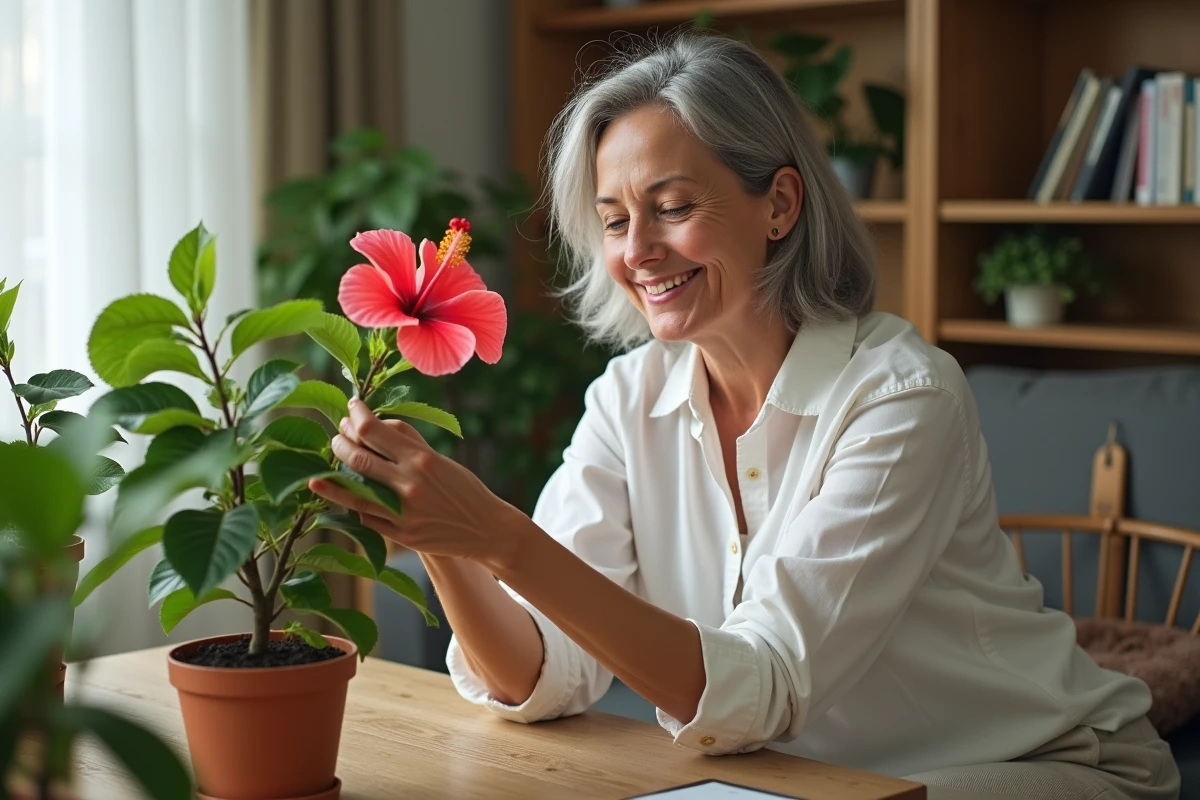
Getting indoor hibiscus flowers often proves more complex than expected, even when the plant appears vigorous. Unlike other houseplants, hibiscus imposes contradictory requirements in terms of light, humidity, and nutrition. Some cultivars persist in refusing to bloom despite what is considered exemplary care.
To hope for flowers to bloom, it is often necessary to correct insidious mistakes: unsuitable substrate, poorly chosen exposure, or a hastily managed resting period. However, adjusting your actions and refining care can unlock that much-anticipated blooming. At every stage, there are concrete methods to meet the changing needs of the hibiscus.
Understanding the Essential Needs of Indoor Hibiscus
The hibiscus rosa-sinensis is appealing for its large flowers, but in an apartment, it requires more than just a bright corner. It needs intense, direct light, close to a south or west-facing window. However, be cautious during heatwaves: a light curtain is enough to soften the most scorching rays, preventing the foliage from drying out.
The choice of substrate is not trivial. A loose, draining mix combining potting soil, perlite, or coarse sand ensures healthy rooting and avoids excessive moisture, the hibiscus’s primary enemy. Nothing should block the flow of water: check for drainage holes under the pot and ensure that the saucer does not turn into a reservoir of stagnant water. Watering should follow the room temperature: moderate, with non-calcareous water, always at room temperature. In the height of summer, the substrate should remain cool without excess; in winter, it dries out more between waterings.
Nutrition also affects flowering. Choose a fertilizer for flowering plants, well-balanced in phosphorus and potassium, and more restrained on nitrogen: too much nitrogen, and the plant focuses on growing leaves at the expense of flowers. Scrupulously respect the indicated doses. To refine your approach, draw from the tips from Votre Déco for indoors, which detail how to adapt the atmosphere and inputs for growing hibiscus in an apartment. Maintaining stable humidity, neither too dry nor saturated, prevents premature dropping of flower buds.
Why Isn’t Your Hibiscus Blooming? Common Mistakes to Avoid
Detecting Warning Signs on Foliage and Roots
The foliage of the hibiscus indoors provides valuable clues: if the leaves lose their luster, turn yellow, or show spots, it is likely that watering or diseases are to blame. When the roots sit in water due to lack of drainage, rot sets in. Pests take advantage of dry air or confinement to attack: aphids and whiteflies invade without warning.
Watering and Light: Adjust Without Excess
Too much water slows the growth of shoots, blocks bud formation, and tires the plant. Conversely, insufficient light, even near a window, condemns flowering. But beware: prolonged direct exposure behind a south-facing window can burn the leaves of the hibiscus rosa-sinensis.
To limit these risks, here are some reflexes to adopt:
- Ensure that the pot has well-opened drainage holes.
- Adjust watering: let the surface of the substrate dry between waterings.
- Place the potted hibiscus in a bright room, but filter the light during the hottest hours.
Fertilizer, Pruning, and New Shoots
An excess of nitrogen fertilizer mainly promotes foliage growth at the expense of buds. Prefer a “flowering plants” fertilizer to support blooming. Pruning should be measured but regular: it encourages new robust stems while keeping the plant balanced and ready to flower.
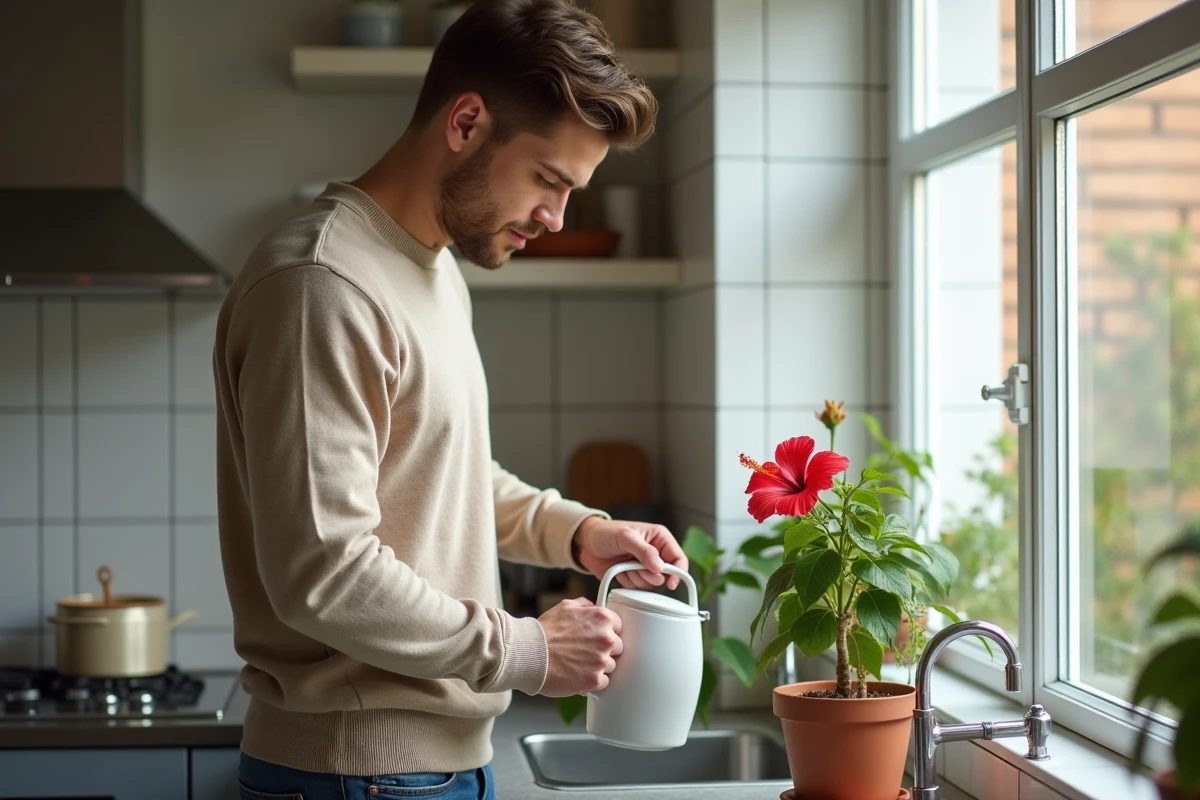
Simple Actions to Stimulate Blooming and Enjoy a Vibrant Hibiscus at Home
Stimulate the Plant at the Right Time
In spring and summer, the hibiscus rosa-sinensis requires constant attention. A flowering fertilizer, rich in phosphorus and potassium and moderate in nitrogen, applied every two weeks, energizes the plant without turning it into a bush. Keep the room temperature between 18 and 22 °C to support bud growth.
Mastering Pruning and Cuttings
Pruning is done just before growth resumes, at the end of winter. This action is not trivial: it restarts vegetation, thickens the stems, and prepares the plant to produce more flowers. To propagate your hibiscus, cut a young stem, place it in a light, well-draining substrate, and then position it in indirect light. If conditions are right, the cutting will root and produce a new specimen as vigorous as the original.
To enhance your results, apply these concrete habits:
- Increase watering frequency when the hibiscus starts to bloom, while ensuring that water never accumulates in the saucer.
- Protect the plant from drafts and avoid unnecessary movements, which can cause stress and slow down blooming.
Installing other indoor plants nearby promotes a more humid atmosphere, conducive to hibiscus. Regular actions count: mist the foliage, inspect the roots, adjust fertilizer input according to the season. With this attentive care, the hibiscus no longer just survives: it thrives, vibrant, at the heart of your living space. The interior then transforms into a living tableau, where each bloom confirms that patience always pays off.