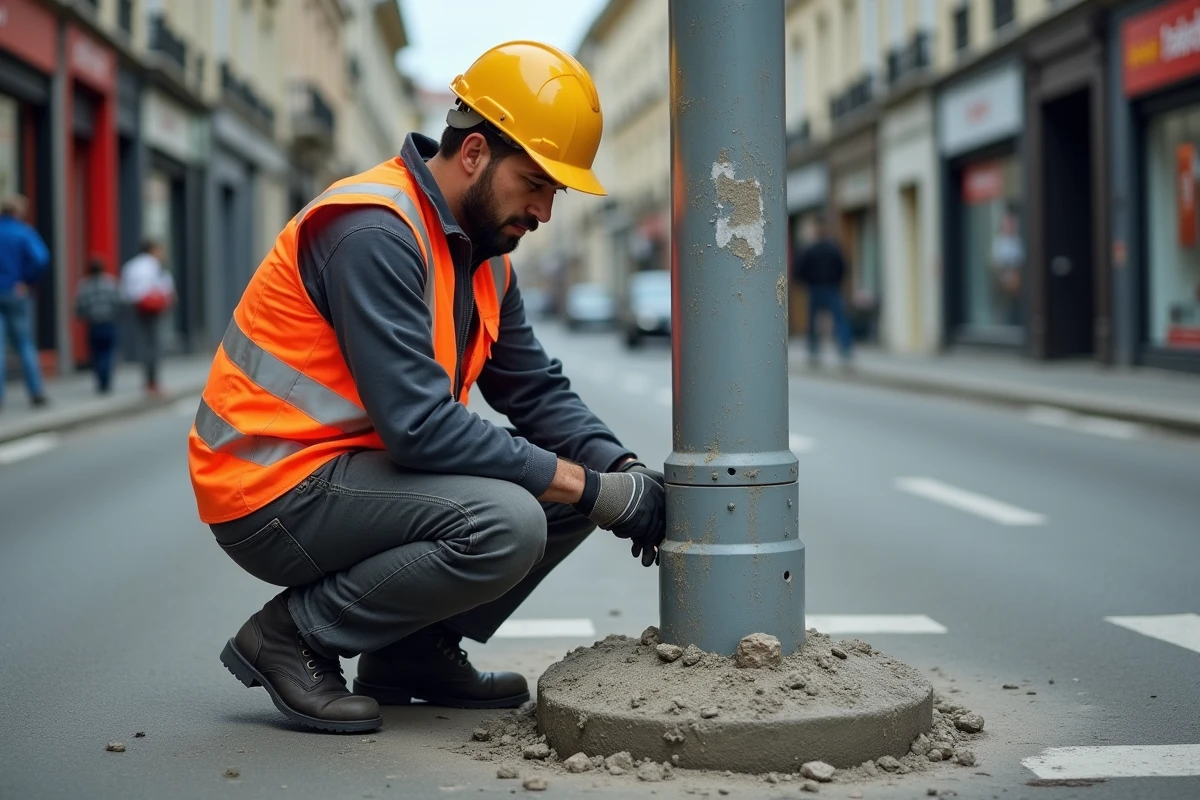
When a municipality decides to install a traffic light at an accident-prone intersection, the first instinct is to look for a unit price. One comes across figures of a few hundred euros for an LED lantern and thinks that the budget will be manageable.
The reality on the ground is very different: between the preliminary traffic study, civil engineering, electrical connection, and controller programming, the lantern represents only a fraction of the total cost of a traffic signal in the city.
Temporary construction lights: a good point of comparison to understand costs
Before discussing a permanent installation, we can look at the cost of a temporary device. For an urban construction site that blocks a lane, the rental of temporary traffic lights starts at around 40 euros excluding tax per day for a pair. On a construction site lasting several weeks, the bill quickly adds up.
This rental price provides a useful benchmark. It covers the equipment, the battery or solar power supply, and sometimes delivery. However, it does not include phase studies, buried cabling, or the permanent pole. This is precisely where the gap with a permanent installation widens.
When comparing the price of a temporary traffic light and that of a permanently equipped intersection, one understands that the equipment weighs less than civil engineering and engineering. Communities that underestimate this ratio end up with significant budget overruns.
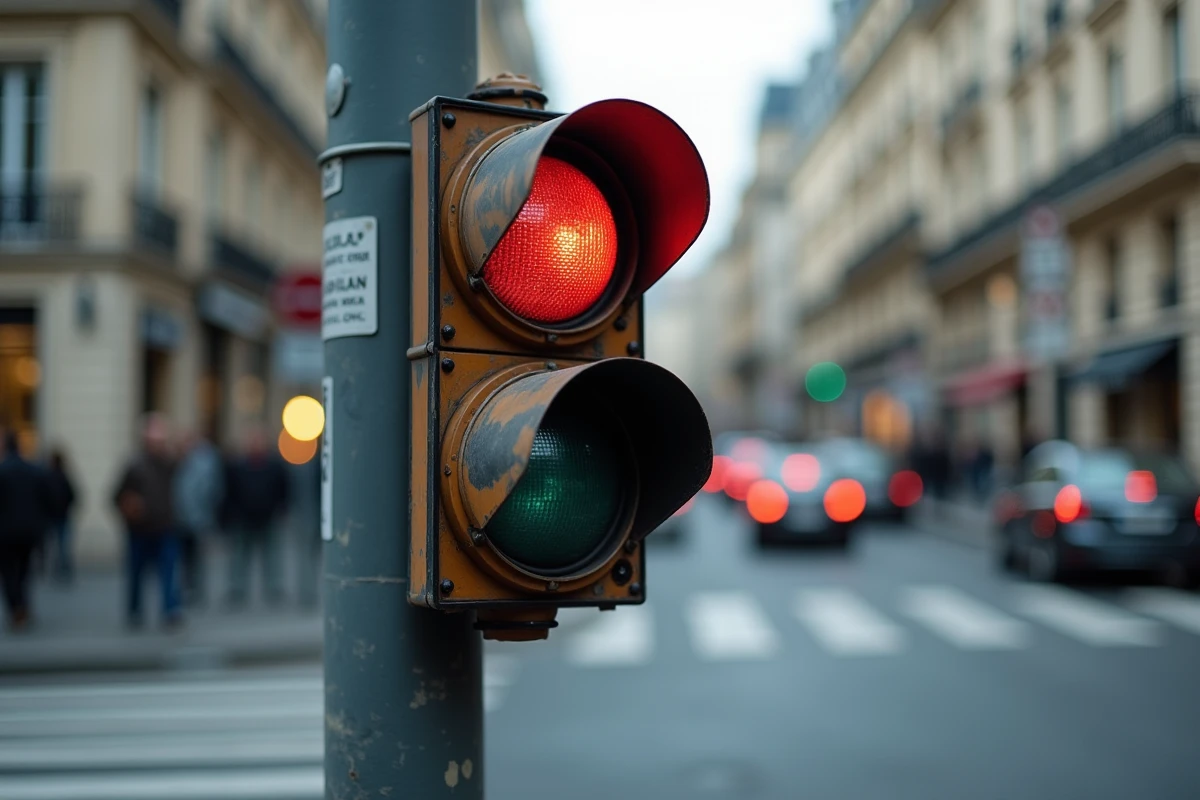
Cost of installing a traffic light in the city: what really weighs in the budget
Some manufacturers list starting prices around 10,000 euros for a simple intersection. For a complex intersection with multiple phases, pedestrian management, and vehicle detection, costs regularly exceed 50,000 euros. The difference comes from items that quotes do not always clearly detail.
Technical items often underestimated
- Traffic study and phase programming: a study office analyzes the flows, models the green times, and calibrates the cycles. This work conditions the entire efficiency of the intersection and represents a significant item.
- Civil engineering and trenches: digging to pass the ducts, pouring the foundation blocks for the poles, resurfacing. On an old road with congested networks, this item can double.
- Connection to the electrical network and control cabinet: mains power requires a connection to the public network, a protection box, and a traffic controller. The cabinet alone costs several thousand euros.
- Complementary horizontal and vertical signage: stop lines, signs, road markings. They are often forgotten in the initial estimate.
The configuration of the intersection changes everything. A simple light on a two-branch departmental road is nothing like a four-branch intersection in the city center, where pedestrian phases, bus lanes, and sometimes bike paths must be managed.
Standard LED lights or smart lights: a choice that impacts the price over ten years
LED technology has significantly reduced the electricity consumption of traffic lights compared to old incandescent bulbs. A standard LED lantern remains the most common choice for medium-sized municipalities.
Smart traffic lights represent a rapidly growing segment in recent years. They integrate vehicle detection sensors, prioritization for public transport, and connectivity allowing centralized control. Their unit price often exceeds double that of a classic LED lantern, but feedback from communities shows a measurable improvement in traffic flow during peak hours.
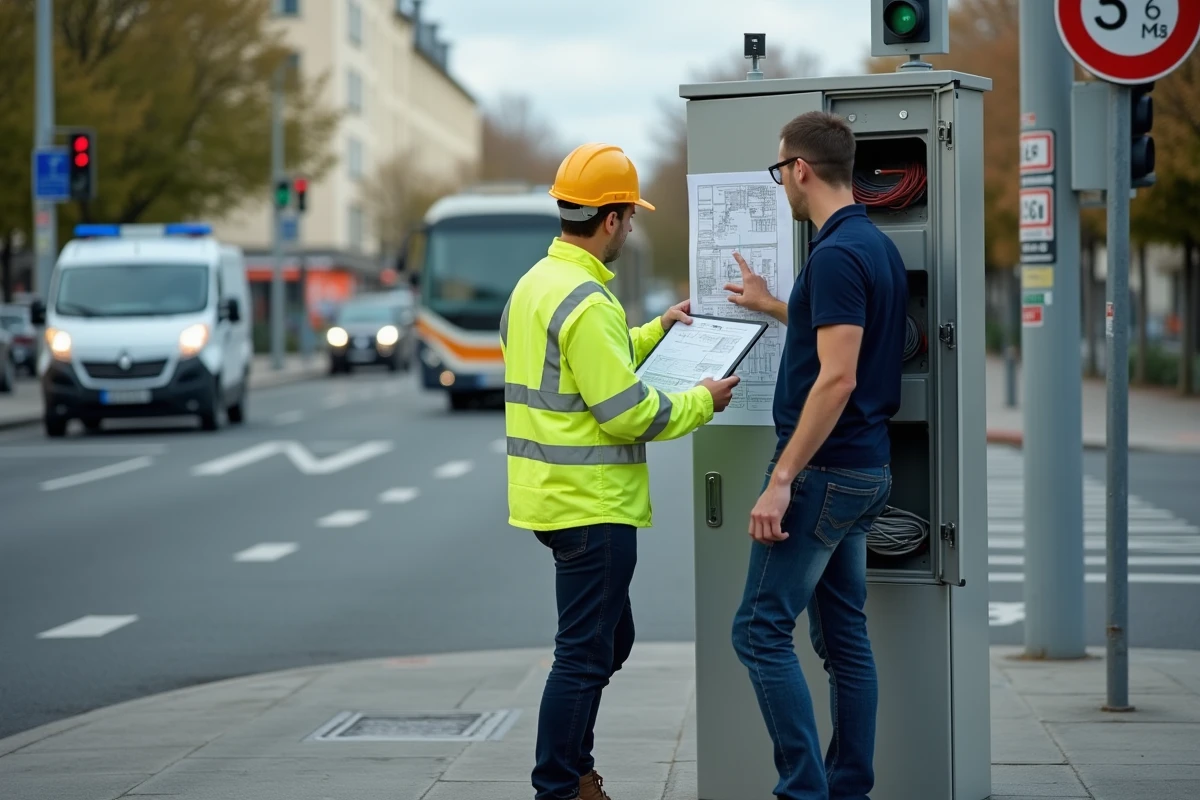
The calculation is not limited to the purchase. Over a lifecycle of ten to fifteen years, annual maintenance can reach up to 10% of the initial installation cost. Preventive maintenance, replacement of parts, updating controllers: these recurring expenses ultimately weigh more heavily than the supply of the lanterns themselves.
Solar or mains power: what impact on the budget
For isolated sites or temporary intersections, a solar power supply coupled with a battery avoids the costs of connecting to the grid. The solar kit is more expensive to purchase but eliminates the trench and connection item. Feedback varies on this point, as autonomy heavily depends on local sunlight and the number of phases managed.
In the city, mains connection remains the norm for permanent installations. The reliability of permanent electrical supply takes precedence over the cost savings of trenching, especially when the intersection manages dense traffic.
Public procurement and quotes: regulatory constraints that increase costs
A municipality cannot purchase a traffic light like an individual buys a lamp. The installation of traffic signals on public roads goes through a public procurement process, with a technical specification that imposes precise standards (wind resistance, visibility, compliance of optics).
The consultation process extends timelines and adds administrative costs. But it also ensures that the equipment meets road safety requirements. Requesting several detailed quotes remains the only reliable way to estimate a realistic budget, as prices vary significantly from one integrator to another depending on the region, team availability, and site complexity.
One last point that elected officials sometimes discover late: the traffic light is not equipment that is simply installed and forgotten. Between maintenance, regulatory changes, and the aging of controllers, the operating budget over fifteen years often exceeds the initial investment cost. Integrating this data from the study phase avoids many painful trade-offs during the term.