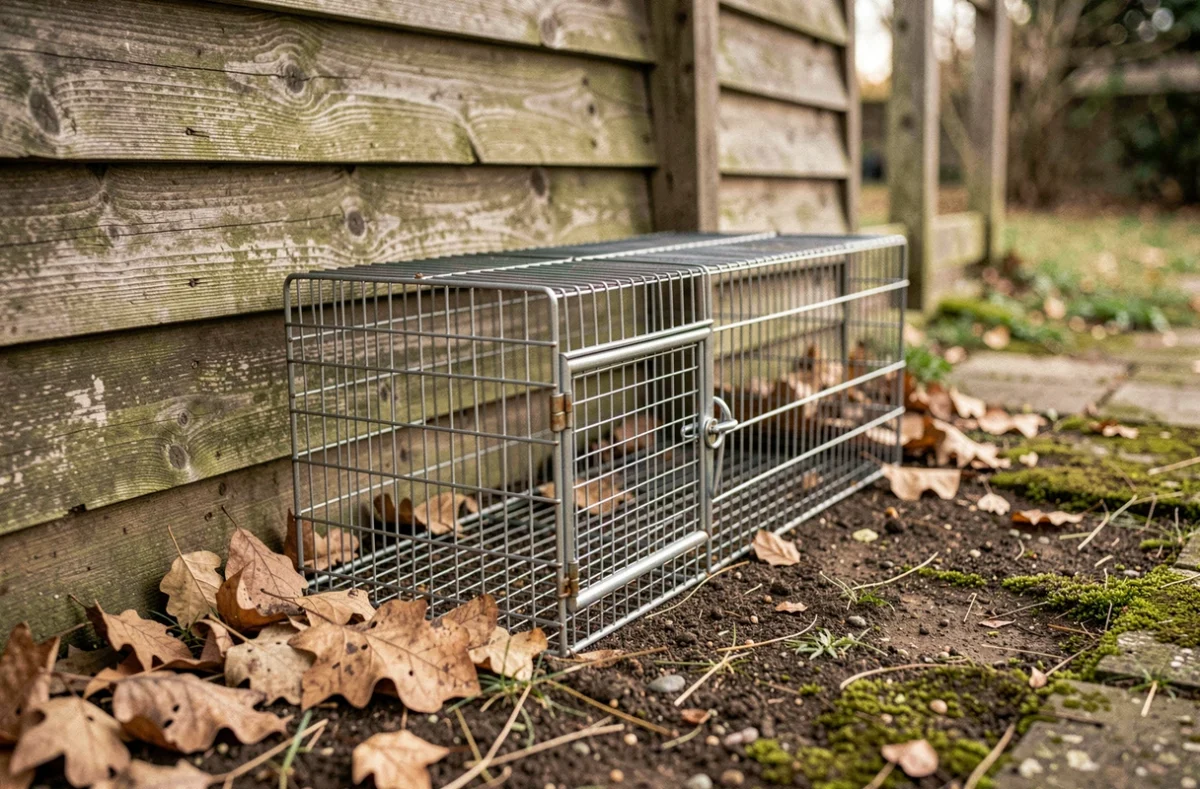
A scratching sound in the attic, chewed cables under the car hood, a persistent smell in the loft: before rushing out to buy a cage, it’s worth checking whether trapping is the right solution.
According to ASPAS data, the stone marten is classified as a species likely to cause damage in 69 French departments under the ministerial order of August 10, 2026. Outside those departments, setting a trap can result in penalties. Choosing the right model therefore starts with checking the regulations, not comparing prices.
Trapping stone martens: check the law before buying a cage
People regularly buy a live-capture cage at a DIY store without realizing that its use is regulated by department. The stone marten is not classified as a species likely to cause damage nationwide: its status varies by area. The same model may be perfectly legal in Bas-Rhin but cause problems in a department where the stone marten is not classified.
Trapping regulations also include licensing and reporting requirements, with specific provisions for trapping in buildings, courtyards, and gardens. Checking the rules with the prefecture or town hall before making a purchase helps avoid unpleasant surprises. If in doubt, hiring a licensed trapper is the safest option legally.
The order of August 10, 2026, also specifies that stone martens may only be trapped in certain locations, particularly near buildings or livestock facilities. Choosing a cage of the right size and strength is not enough if the location is not permitted. You can compare every model on the shelf, but if the trap is set in the wrong place, it is illegal.
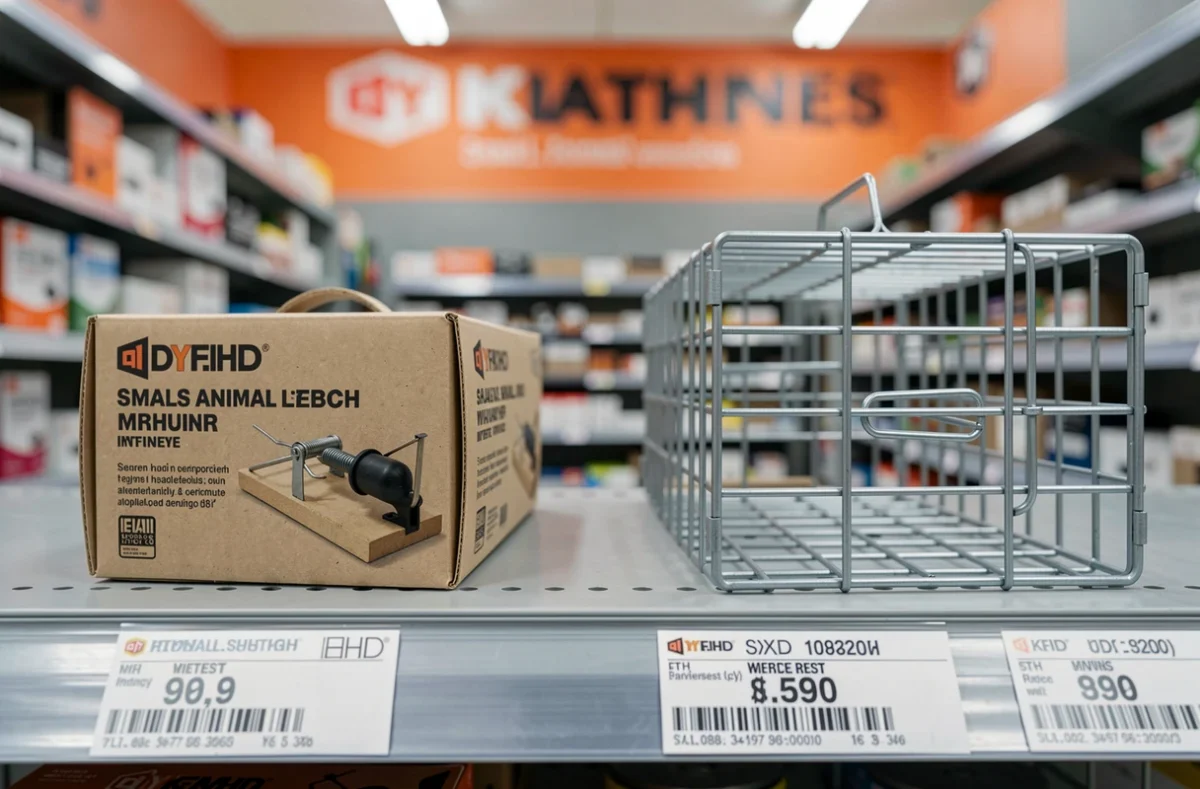
For those looking to compare stone marten traps at Brico Dépôt, checking the regulations is still a prerequisite before buying.

Stone marten live traps: practical selection criteria
Once you have confirmed that trapping is legal, choosing a model comes down to a few practical criteria. Not all traps sold at DIY superstores are equal, and price is not the best indicator.
Cage dimensions and mesh strength
A stone marten measures between 40 and 50 cm (body length, excluding the tail) and can squeeze through narrow openings. A cage that is too short or has mesh openings that are too wide can let the animal escape or injure itself trying to get out. Choose a model that is considerably longer than the animal, with rigid welded metal mesh strong enough to withstand bites.
Trigger mechanism and safety
The closing mechanism should activate quickly without risking trapping a paw or tail. Floor-plate triggers are the most common: the animal steps on the plate and the door closes. A slow or poorly calibrated mechanism can result in partial captures, injuring the animal and making it harder to handle.
Protecting non-target animals is just as important as trap effectiveness. Regulations require accidental captures (such as a neighbor’s cat or a hedgehog) to be released immediately, and traps to be checked in the morning, no later than noon. A stable model that is easy to open and placed away from pets’ usual routes helps reduce these risks.
What to check before buying
- The cage should be over 80 cm long to prevent the tail from blocking the door as it closes
- The metal mesh should be welded, not simply twisted, to withstand escape attempts
- The carrying handle should let you move the cage without putting your fingers within reach of the captured animal
- The trigger mechanism should be testable before installation
Trapping or securing access points: which solution should you choose?
Trapping is not always the best solution. If the stone marten is getting in through a hole in the roof or an improperly sealed utility duct, catching it without blocking the entry point solves nothing. Another stone marten will move into the vacant territory within a few weeks.
Securing access points (fitting grilles over vents, sealing openings larger than 5 cm, and protecting cables under the hood) addresses the cause, not just the symptom. In many cases, this costs less than repeated trapping and requires no administrative steps.
A trap may be appropriate when damage is already occurring and you need to remove an animal that has settled in, or when access cannot be sealed off (old lofts, open agricultural buildings). But setting a cage without a plan to secure access points means dealing with the same problem over and over.
When to call a licensed trapper
In three situations, hiring a professional is a better option than buying a trap from a store:
- The department requires a trapping license and you do not have the necessary training
- The stone marten has settled in a hard-to-reach place (a suspended ceiling, cavity wall, or steep roof) where setting and checking the cage daily would be difficult
- Several capture attempts have failed, suggesting a placement or baiting problem that an experienced trapper can resolve more quickly
A licensed trapper knows the local requirements, has the right equipment, and handles the animal’s release or disposal in accordance with the law. The cost of a one-off visit is often less than several weeks of unsuccessful attempts.
Bait and placement: mistakes that can prevent a successful capture
Bait attracts attention, but the trap’s location determines the outcome. Stone martens follow regular routes, often along walls, beams, or gutters. Placing the cage in the middle of an attic, away from any route, greatly reduces the chances of a capture, even with good-quality bait.
A piece of egg, meat, or fruit is usually enough. Placement along the animal’s usual route matters more than the bait. You can identify these routes by claw marks, droppings (black, twisted, and often found in piles), and greasy marks on surfaces the animal passes over.
One final common mistake is failing to secure the cage to the ground. A panicked stone marten can tip over a lightweight trap, force it open, or injure itself. Wedging the cage in place with bricks or securing it to a stable surface is part of the setup, not an optional extra.