
Marriage banns are a mandatory formality before any civil wedding ceremony in France. Their publication allows anyone to report a potential impediment to the marriage. Couples preparing to marry often ask where they can view the banns and how to check that they have been posted, particularly when the future spouses live in different municipalities.
Posting marriage banns at the town hall: rules based on place of residence
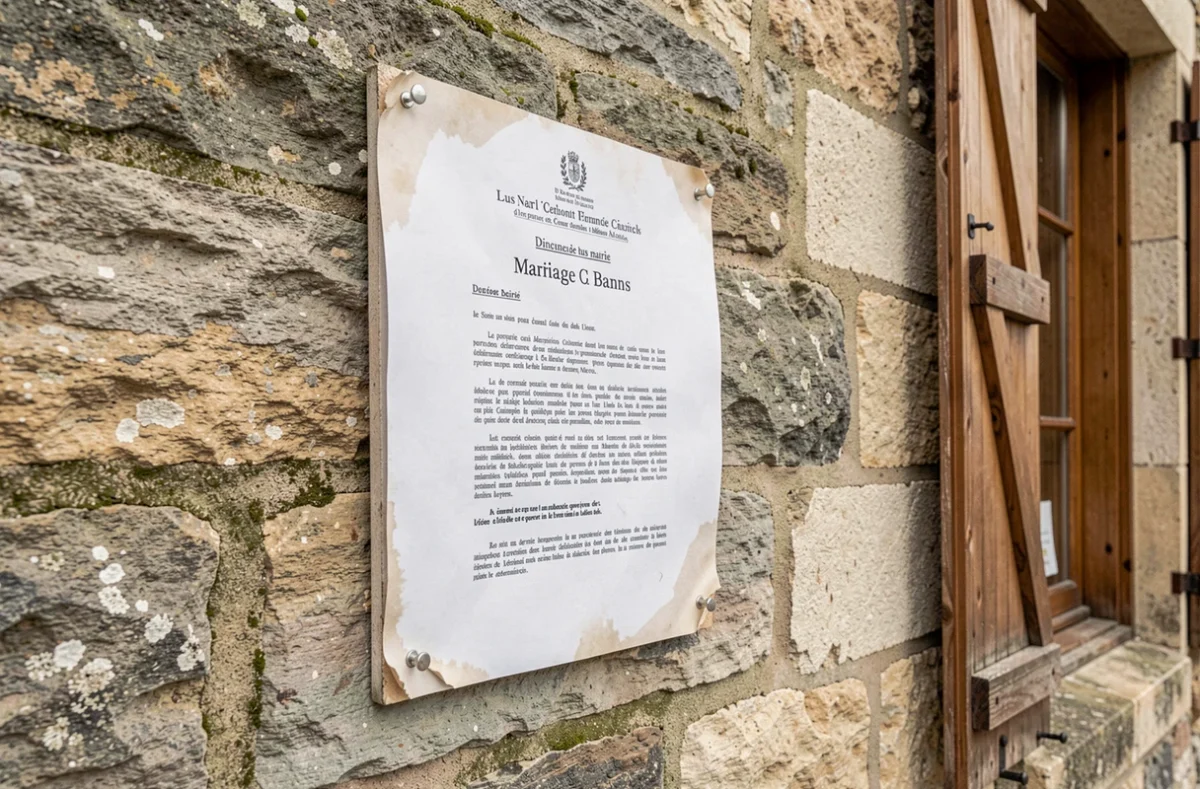
Marriage banns are published by the town hall where the wedding will take place. The civil registrar posts them on the designated notice board, which is accessible to the public during opening hours.
If both future spouses live in the same municipality, a single notice is sufficient. The process is more complicated when they live in different municipalities: the banns must then be published at each town hall where either spouse resides. The civil registrar at the town hall where the wedding will take place sends the information to the town hall in the second spouse’s municipality, which then posts its own notice.
For couples wondering where to find marriage banns in France, the answer is straightforward: on the official notice board at each town hall involved in the application.
| Where the future spouses live | Where the banns are posted | Town hall responsible for sending the information |
|---|---|---|
| Same municipality | Town hall in their shared municipality of residence | No transmission required |
| Different municipalities | Town hall in each spouse’s municipality of residence + town hall where the wedding will take place, if different | Town hall where the ceremony will take place |
| One spouse lives abroad | French town hall + consulate or embassy in the country of residence | French town hall to the consular office |
How to check that the banns have been published
There is no centralized online system for viewing marriage banns. To check, you must visit or call the civil registry office at the relevant town hall.
Standard case: both spouses live in France
Each future spouse can visit the town hall in their municipality of residence to check the official notice board. The banns remain posted for ten consecutive days, including the day they are published. The civil registrar can only perform the marriage once this period has expired and they have received a certificate of no objection from each town hall involved.
In practice, a phone call to the civil registry office is enough to confirm that the banns have been posted. The town hall can provide the publication start date and the date from which the wedding can take place.
Special case: one future spouse lives abroad
If one of the future spouses lives outside France, the French town hall sends the information to the French consulate or embassy in their country of residence. The consular office then publishes the banns locally.
The posting period remains the same, but the time it takes to send the information between the town hall and the consulate can extend the process by several weeks. To check that the banns have been published abroad, the future spouse concerned should contact the relevant French consulate directly.
- Contact the civil registry office at the town hall where the wedding will take place to confirm that the application has been sent to the consulate
- Contact the French consulate in the country of residence to check the actual publication date
- Ask the consulate to send the certificate of no objection to the French town hall; the wedding cannot take place without this document
Deadlines and common delays in publishing marriage banns
The marriage application must be submitted to the town hall at least several weeks before the intended wedding date. Most town halls require applications to be submitted at least one month before the wedding, but some require more notice, particularly in large cities with a high volume of applications.
Several issues can delay publication of the banns:
- An incomplete application (missing ID, birth certificate issued more than three months ago, or no proof of address)
- Delays in sending information between town halls when the future spouses live in different municipalities
- Extended postal or administrative delays for applications involving a consulate abroad
- An objection to the marriage filed by a third party with the civil registrar, which suspends the process until a court decision is made
An objection to the marriage is the only legal mechanism for blocking it after the banns have been posted. It must be based on grounds set out in the French Civil Code, such as a prohibited family relationship, bigamy, or lack of consent. The public prosecutor may also object to the marriage.

Records and access to marriage banns after the wedding
Once the wedding has taken place, the banns are no longer displayed. They are removed from the official notice board and are not kept in a publicly accessible archive.
Proof of publication is included in the marriage file held by the town hall. This file is not open to the public. However, the marriage certificate itself is accessible: anyone can request an extract without parentage details, while a full copy is available only to the spouses, their ascendants and descendants, and certain government agencies.
Town hall civil registers, which contain marriage records, are transferred to departmental archives after several decades. These archives are freely accessible for genealogical or historical research.
For couples currently preparing to marry, the most reliable approach is to contact each town hall involved in the application. A quick call to the civil registry office will confirm the publication status and the expected date from which the wedding can take place.