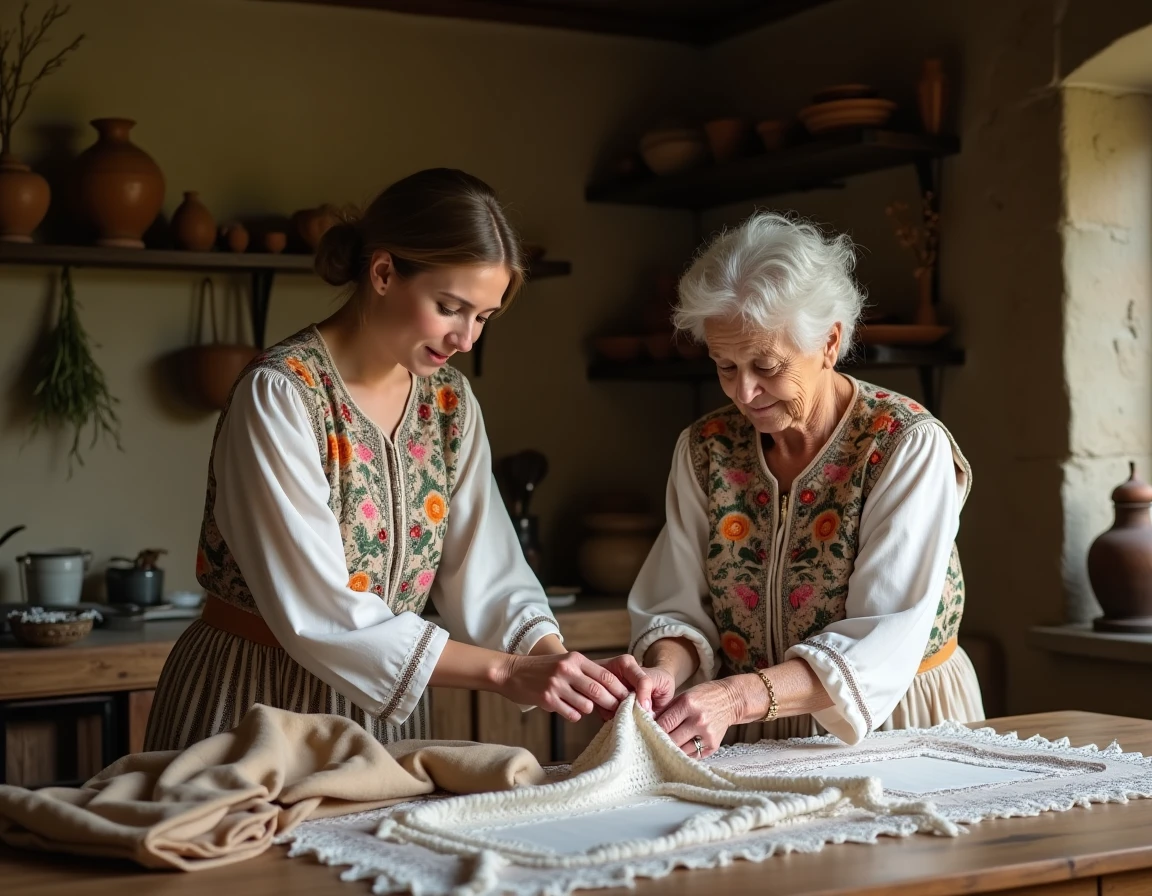
When preparing for a wedding, one often hears “it’s the tradition” to justify the bouquet toss, and “it’s the custom here” to explain why guests wear a particular ribbon. The two words seem interchangeable, but they do not refer to the same reality. Custom refers to a practice repeated within a group, often without being able to identify its precise origin. Tradition implies a narrative passed down, a claimed lineage between generations.
Legal Custom and Symbolic Tradition: Two Distinct Mechanisms
In the realm of law, the distinction becomes operational. A legal custom derives its strength from the prolonged repetition of a behavior accepted as obligatory by a community. It does not need a text to exist: it is the constant usage that makes it binding.
Tradition, on the other hand, operates differently. In French legal vocabulary, the word “tradition” retains a precise technical meaning: the physical transfer of an object (tradition of the sold item). It has nothing to do with the common meaning of “ancestral practice.”
In French private law, custom tends to lose its importance as an autonomous source since the reform of contract law in 2016. There is more reliance on the Civil Code than on unwritten usages. Understanding the differences between custom and tradition helps avoid frequent amalgams in legal or anthropological discussions.
In practice, this distinction has concrete consequences. A court may recognize a local custom (a right of way, a commercial practice) if its repetition and acceptance are proven. No one can invoke a “tradition” before a judge to achieve the same effect: it has no normative force by itself.

Office Customs and Company Traditions: A Real-World Test
The workplace offers a concrete observation ground. In organizational sciences, authors explicitly distinguish “office customs” from “company traditions,” and the difference is not anecdotal.
Office customs are those practices repeated without official discourse. One thinks of the actual end time of a meeting (never the one displayed in the agenda), the coffee taken standing before sitting down, or the fact that no one eats lunch before the manager. These unspoken customs constrain daily behaviors more than institutional rituals.
Company traditions, on the other hand, are staged: annual seminars, award ceremonies, storytelling around the founder. They involve a constructed narrative, deliberately transmitted to newcomers.
- Office customs are learned through observation and imitation, never through an internal document. Violating this custom causes immediate discomfort in the group.
- Company tradition is carried by internal communication. It can be modified or removed by managerial decision without changing daily operations.
- When a tradition disappears (a canceled seminar), it is regretted. When a custom disappears (a manager imposes a new meeting rhythm), the entire collective must readjust.
This case study shows that custom structures daily life, tradition structures the narrative. One can live without tradition, but not without custom.
Intangible Cultural Heritage: When a Custom Becomes Official Tradition
The process of inscription in UNESCO’s intangible cultural heritage illustrates a transformation mechanism that few anticipate. Practices considered mere local customs (village festivals, artisanal know-how) change status as soon as they are listed on an official register.
Heritage inscription transforms a custom into a recognized tradition, complete with a narrative, documentation, and identified bearers. The mode of transmission changes: it shifts from spontaneous repetition to a conscious effort of preservation.
This shift has a paradoxical effect. The practice gains visibility and symbolic prestige, but it sometimes loses its local binding character. Reactions vary on this point: some communities believe that heritage designation freezes a practice that was evolving naturally, while others see it as a guarantee of survival against urbanization or globalization.
Oral Transmission vs. Institutional Transmission
Custom is transmitted through shared practice. One learns to prepare a regional dish by watching, not by reading a sheet. The patrimonialized tradition, however, is conveyed through formal supports: videos, certified workshops, funded festivals.
This difference in transmission channels alters the content. An orally transmitted custom evolves with each generation without anyone being offended. A tradition inscribed in heritage is monitored, compared to its “original” version, and sometimes corrected to remain compliant with a candidacy file.

Religious Tradition and Cult Custom: A Porous Boundary
In the religious field, the distinction takes yet another form. In Christian theology, “Tradition” with a capital T refers to the transmission of faith as received from the apostles. It is a doctrinal concept, not a mere habit.
Cult customs, however, vary from parish to parish, from country to country. The color of liturgical garments on a specific day, the way to greet one another after the service, the choice of hymns: all of this falls under local custom.
- The Tradition (in the theological sense) cannot be altered by a village priest. It engages the doctrinal authority of the institution.
- Cult custom can evolve without crisis: one changes the time of the mass, adopts a new hymn, modifies the order of the procession.
- In Islam, a comparable distinction exists between foundational texts and local cultural practices, which differ significantly from one country to another.
Confusing doctrinal tradition and local custom generates recurring tensions in religious communities. A change in custom is refused by presenting it as an affront to Tradition, which blocks any adaptation.
The next time one hears “it’s the tradition,” the useful question is whether one is talking about a voluntarily transmitted narrative or a gesture repeated out of collective habit. The answer changes what can be done with it: adapt, abandon, or protect.